

McAllen News, Edinburg TX News, McAllen ISD, School facilities, Bond Issue
Arnoldo Mata
McAllen, TX - McAllen ISD leaders and consultants used a Jan. 7 workshop meeting to outline a proposed $335 million facilities bond program built around campus upgrades, safety improvements and districtwide maintenance needs, a package district officials said could be financed without a tax-rate increase.
The session was the final meeting of the Facilities Forecast Advisory Committee (FFAC), a group that has spent months touring campuses, attending walkthroughs and reviewing needs with district staff and consultants.
McAllen ISD officials and partners in attendance
Lorena Garcia, McAllen ISD deputy superintendent for business and operations, opened the meeting and thanked FFAC members for participating in “several meetings and walkthroughs.”
Garcia introduced several district and partner representatives in attendance, including:
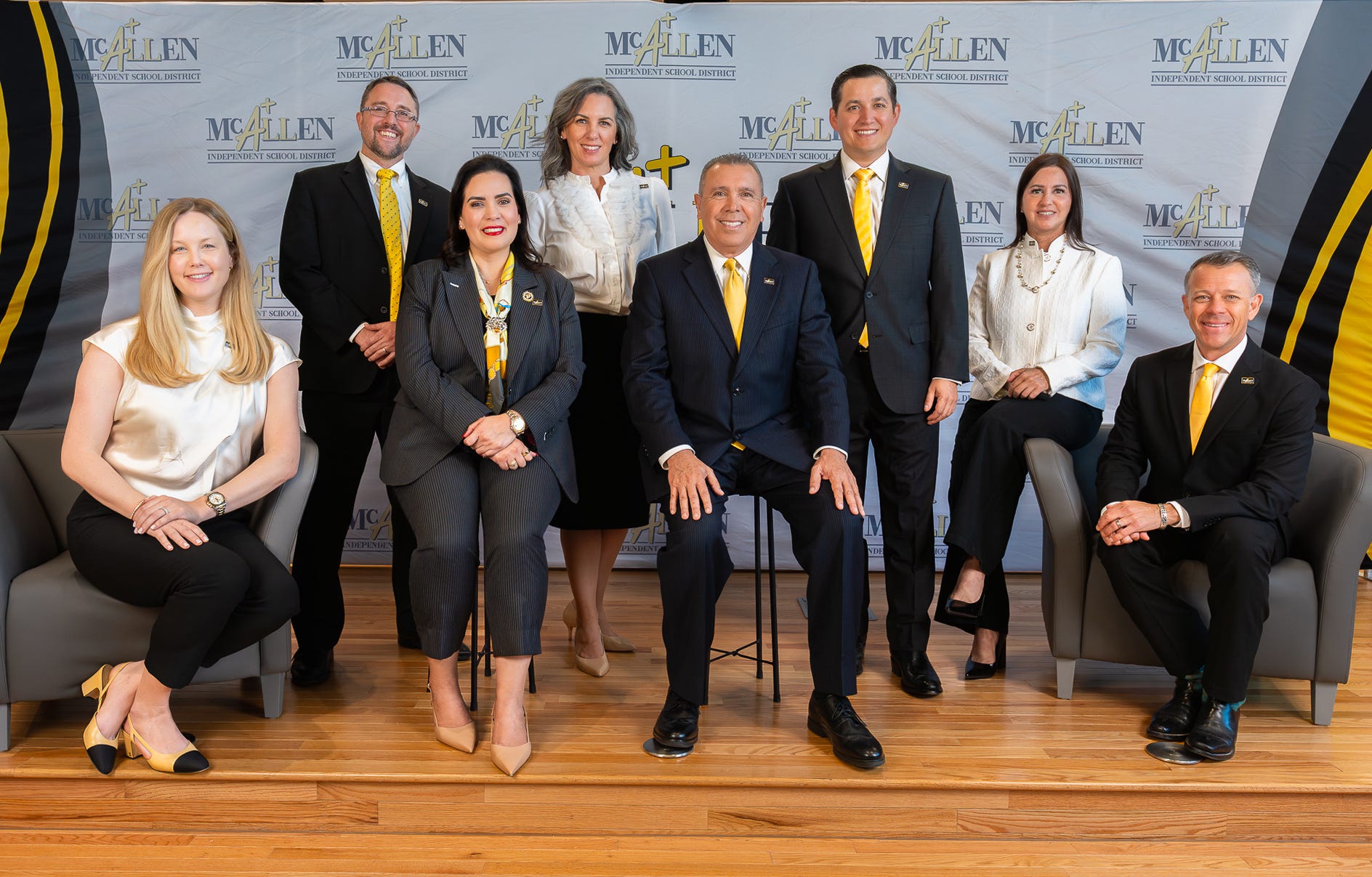
Board President Aaron D. Rivera
Board Vice President Lucia Regalado
Trustee Roberto J. Carreon
Trustee Robert A Haddad
Superintendent Dr. Rene Gutierrez
Garcia also recognized district partners, including representatives from Estrada Hinojosa, naming Dr. Miguel de los Santos and Jose Silva.
The facilities presentation was delivered by the district’s architectural team from Pfluger Architects, led by Dr. Robbie McGowan, with project and cost details presented by Josh Sawyer. McGowan later introduced additional members of the Pfluger team in attendance, including Connie Rivera, Sean Connor, Dr. David Young, and other staff supporting community engagement and planning.
No tax-rate increase bond plan explained
A central theme of the discussion was the district’s plan to pursue a bond program without increasing the tax rate. Consultants and district representatives said McAllen ISD’s estimated capacity, about $335 million, is tied to maintaining the district’s interest and sinking (I&S) tax rate currently used to pay down existing bond debt.
District representatives used an analogy to describe the approach: continuing the same payment after one debt is paid off, similar to replacing a vehicle while keeping a monthly payment steady.
District officials acknowledged that tax and bond financing can be difficult for voters to understand and said public education would be a major focus if the board calls a bond election.
Five categories of projects
Pfluger’s presentation grouped proposed projects into five major “buckets,” intended to help explain the purpose behind projects and how they align with district priorities:
Modernization and alignment (upgrades tied to instructional goals, including CTE and cafeteria improvements)
Wellness, safety and security (front-entry access changes, security improvements and student wellness spaces)
Learning beyond the classroom (fine arts and other extracurricular learning spaces)
District equity and growth (classroom additions and campus updates to reduce reliance on portables and improve equity)
Capital and deferred maintenance (HVAC, roofing, lighting, paving and districtwide systems)
Consultants emphasized that “deferred maintenance” refers to major replacement needs that can exceed an annual operating budget, comparing it to replacing a home air-conditioning system.
Key McAllen ISD bond projects and cost estimates
Sawyer told the committee the figures presented were total project costs, including construction, design, furniture, technology and related expenses, rather than construction-only numbers.
Projects and estimated totals presented during the meeting included:
CTE expansion at McAllen High, Memorial High and Rowe High: $39.49 million
Cafeteria modernizations at Milam, Alvarez, Seguin and Morris Middle School: $33.05 million
Front-entry security vestibules and access upgrades at several campuses: $13.47 million
Elementary gyms and pavilion enclosures at Perez, Castaneda, Sanchez, Hendricks and Houston elementaries: $26.92 million
Fine arts modernizations including black box theater space and dedicated mariachi space at the three high schools: $35 million
Classroom additions at Gonzales, Milam and Morris: $38.73 million
High school campus refreshes at McAllen High, Memorial and Rowe: $45.15 million
Priority-one districtwide facility needs (HVAC, roofing, paving, lighting, safety/security systems and controls): $103.19 million
Pfluger said the combined list of projects aligns with the district’s stated bond capacity of about $335 million.
Bond election timeline and voter registration deadlines
McGowan outlined the next steps, telling attendees the board is expected to review the proposal in stages:
Jan. 13: Presentation to the board
Jan. 29: Draft bond resolution review
Feb. 10: Expected board action to call a bond election (with state-required deadline shortly after)
March–April: Community education period
April 2: Last day to register to vote
April 20–28: Early voting window
May 2: Election Day
Multiple speakers emphasized that, even if approved, the work would roll out over multiple years through phased borrowing and construction scheduling.
Community education and legal limits for school employees
Discussion during the workshop included how the district can communicate with voters, what employees can and cannot do, and how community members can help.
District leaders said employees may educate the public about district needs and proposed projects but cannot use district resources or work time to advocate for passage using “vote for” messaging. Speakers also noted that community members and volunteers can advocate independently.
A campus leader asked whether facilities tours could be used to show needs. District representatives said tours and information sessions can be conducted as long as they are framed as educational and avoid advocacy language.
Questions also focused on whether the district would provide more visuals and project details. Consultants said renderings and conceptual materials can help explain the bond while still leaving room for design changes that may occur later during permitting and construction.
Learning from past bond efforts
Speakers also referenced the district’s last failed bond election, noting the importance of learning from past mistakes, addressing skepticism, and clearly explaining consequences, including the possibility that delaying improvements could result in higher costs or future tax increases.
“This is about kids, not construction,” district leaders reiterated. “And it’s about long-term planning, not short-term politics.”
The workshop concluded with district officials expressing confidence in the process emphasized by transparency, community involvement, and a focus on improving learning environments for future generations of McAllen ISD students.