

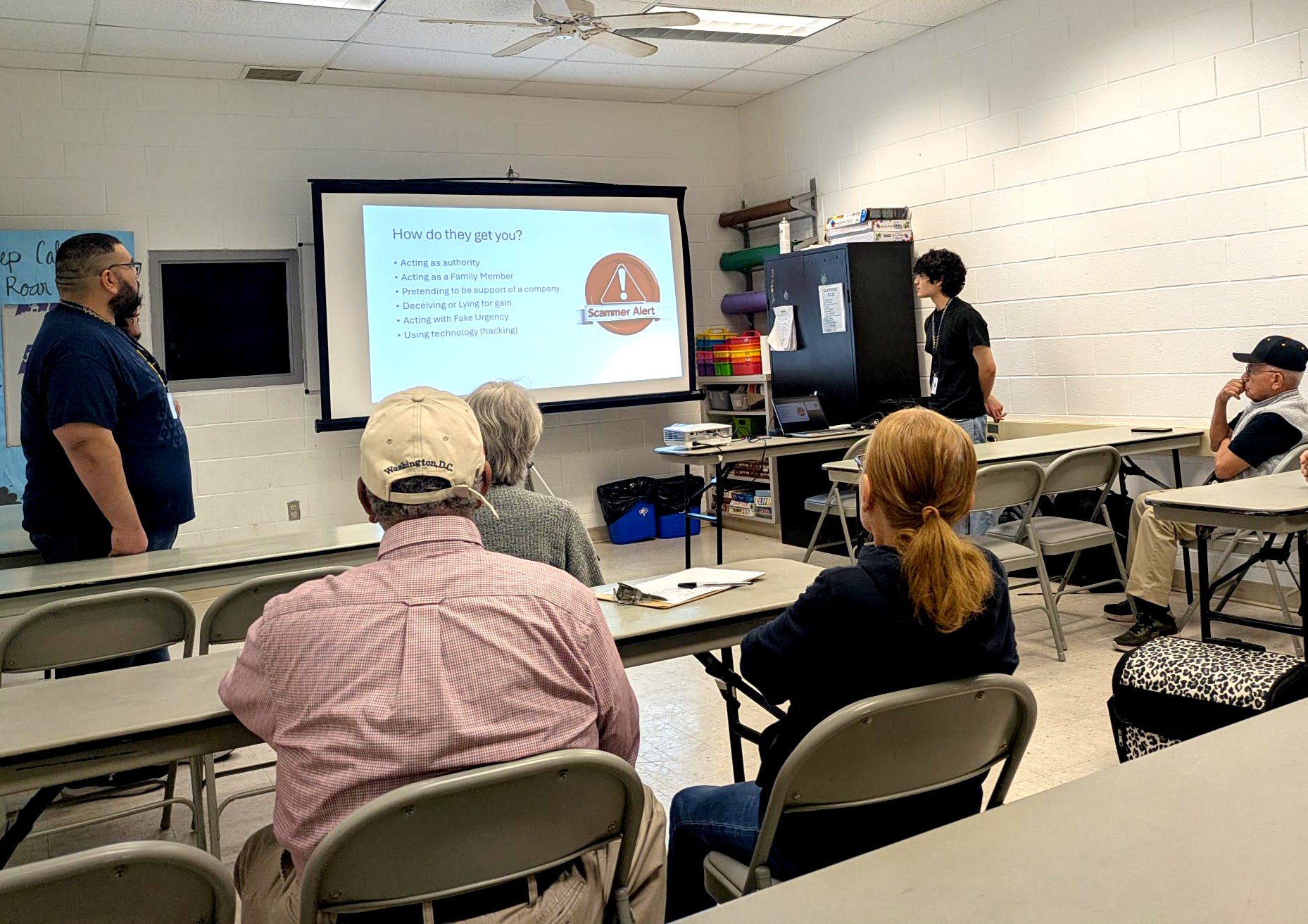
Photo Caption: South Texas College now looks ahead to the future for its Cybersecurity Clinic after the program’s inaugural semester gave students hands-on experience helping local businesses and nonprofits strengthen their cyber defenses across the Rio Grande Valley. Applications for the next Cybersecurity Clinic cohort are currently open through July 5th for students looking to sign up, but businesses and nonprofit organizations can also apply year-round to receive free cybersecurity services through the clinic. Photo courtesy STC Communications.
Joey Gomez, STC Communications
McAllen TX – South Texas College’s Cybersecurity Clinic now looks ahead toward the future for its Cybersecurity Clinic after the program’s inaugural semester gave students hands-on experience helping local businesses and nonprofits strengthen their cyber defenses across the Rio Grande Valley.
Deadline July 5
Applications for the next Cybersecurity Clinic cohort are currently open through July 5 for students interested in applying, but businesses and nonprofit organizations who wish to participate can also apply year-round to receive free cybersecurity services through the clinic.
“It has been a learning experience, not just for the students, but for us as faculty as well,” said Francisco Salinas, STC Cybersecurity program department chair and assistant professor, as well as co-principal investigator for the clinic. “We learned a lot and we are already thinking about changes for the fall based on the experiences we had this semester.”
Launched earlier this spring, the Cybersecurity Clinic selected 12 students from STC’s Computer and Information Technologies bachelor’s programs as well as its associate degree and certificate programs in Cybersecurity to work directly with community organizations and businesses.
National Science Foundation Grant
Backed by a $467,000 Advanced Technological Education grant from the National Science Foundation, the three-year initiative is the first cybersecurity clinic of its kind in the region and designed to strengthen local cyber defense efforts while preparing students for the workforce.
Throughout the semester, students conducted vulnerability assessments, cybersecurity awareness training and risk management activities for local businesses and nonprofits under faculty supervision.
Working With The Community
Through the Cybersecurity Clinic, students participated in client visits with two retail stores, two health clinics and one electrical contractor. They conducted five risk assessments and one vulnerability scan.
They also participated in numerous awareness trainings and workshops in the community including support services at Lark Community Center, Las Palmas Community Center, Palmview Community Center and a professional presentation at Rio Grande Valley Health Information Management Association (RGVHIMA), a nonprofit handling the management of health information for patients.
From classroom to real world situations
Salinas said one of the biggest takeaways from the clinic’s first semester was seeing students transition from classroom theory into real-world cybersecurity environments.
“In the classroom, it’s controlled,” Salinas said. “But when students go into a real network and work with actual organizations, it’s a totally different experience. Technology is always evolving and so are we.”
Nicholas Hinojosa, assistant professor of Computer Science and co-principal investigator for the project, said the clinic has also helped students develop communication and leadership skills in addition to technical expertise.
“The students not only gained technical skills, but the biggest thing they gained was soft skills,” Hinojosa said. “They learned how to present in front of large audiences, communicate technical information in ways people can understand and interact with organizations in the community.”
Hinojosa said those experiences are helping students become more employable while also supporting the region’s growing need for cybersecurity professionals.
The next cohort
The next step, according to the STC faculty is planning improvements for the next cohort, including expanding hands-on training, tabletop cybersecurity exercises and additional penetration testing opportunities.
Joseph Garcia, a student in the inaugural cohort, said the clinic allowed him to apply what he learned in class in real-world settings while helping organizations strengthen their security posture.
“I really enjoyed being able to connect with nonprofits, small businesses and other groups in the community,” Garcia said. “It has been exciting to learn the tools, experiment and really get my hands dirty, so to speak, with cybersecurity.”
Another student in the cohort, Marc Cardenas, said the experience became a defining part of his education at STC.
One of his favorite aspects, he said, was working directly with community members and organizations while conducting cybersecurity research with his team.
“I would tell future students interested in this clinic to take every chance they get while they are here,” said Cardenas, who recently earned his bachelor’s degree in Computer and Information Technologies. “This program is really great and it is mentored by amazing faculty. It can seem scary at first, but you never know until you try.”
For more information about STC’s Cybersecurity Clinic including registration for future students or potential businesses, visit southtexascollege.edu/academics/cybersecurity/clinic.html.